
Bollywood actor Imran Khan has been directed to leave India by October 28, 2026,
following his participation in a protest in Mumbai against Chief Election Commissioner
Gyanesh Kumar. The notice issued by the Foreigners Regional Registration Office
(FRRO) has triggered a political and legal controversy, with questions being raised
about the rights of Overseas Citizen of India (OCI) cardholders and the government’s
powers over foreign nationals.
In the latest development on October 17, Khan approached the Bombay High Court
challenging the directive and seeking urgent relief. His legal team has questioned the
grounds for the notice, arguing that the authorities have not adequately explained the
alleged immigration violations. The case is expected to be taken up for an urgent
hearing.
Why Has Imran Khan Been Asked to Leave India?
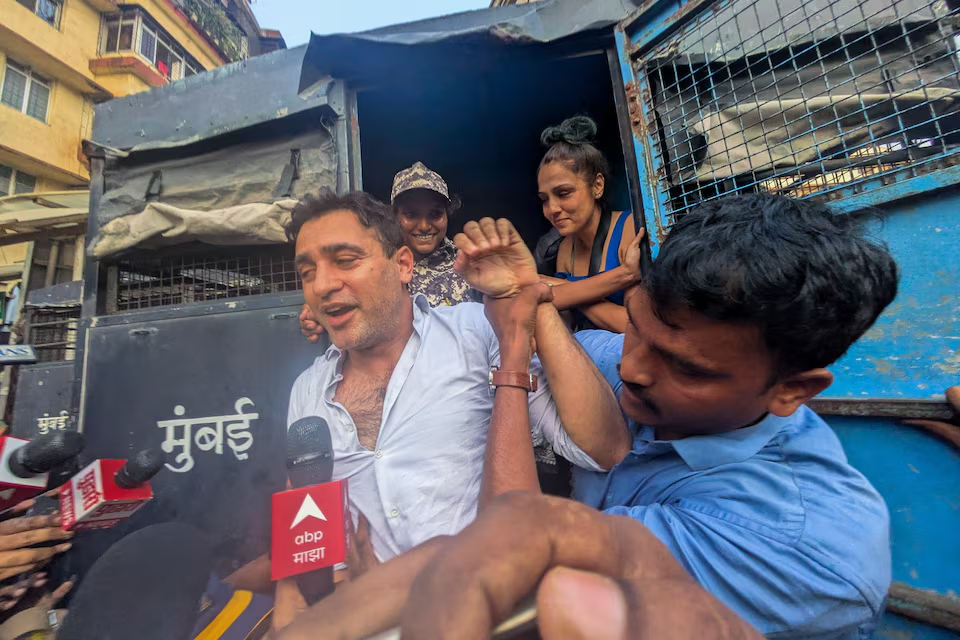
The controversy began after Khan attended a demonstration at Mumbai’s August
Kranti Maidan on October 10. The protest, associated with the satirical political group
Cockroach Janata Party (CJP), demanded the resignation of Chief Election
Commissioner Gyanesh Kumar.
Khan attended the demonstration alongside his partner, actor Lekha Washington, and
his cousin Zayn Marie Khan. The three were detained by police during the incident and
were subsequently released.
The action against the actor followed a complaint by BJP leader Kirit Somaiya, who
questioned his participation in the political demonstration despite his reported US
citizenship and OCI status. Somaiya called on the authorities to investigate whether
immigration rules or conditions governing his status had been violated.
The FRRO subsequently issued a notice directing Khan to leave India by October 28.
The notice reportedly cites alleged contraventions of the Immigration and Foreigners
Act, 2025, and the rules and orders made under it. It also warns of possible
prosecution if he fails to comply.
However, the precise legal basis for the alleged violation has become a central issue in
the developing dispute.
Imran Khan Challenges the Notice in Court
In his petition before the Bombay High Court, Khan has sought the cancellation of the
notice and an urgent stay on its implementation. His lawyers argue that the authorities
failed to specify the exact provision of the law he allegedly violated, along with the
circumstances and details of the alleged breach.
The petition also questions whether the authorities adequately considered his OCI
status and his long-standing connection with India. Khan has reportedly lived in the
country since the age of two.
His legal team maintains that he was present at the protest as a resident of Mumbai
and disputes the suggestion that his participation, by itself, justified the direction to
leave the country. The petition seeks access to the records and material on which the
authorities based their decision.
What Are the Rights of OCI Cardholders?
An OCI card provides certain long-term residency and travel privileges to eligible
foreign nationals of Indian origin. However, it does not grant Indian citizenship, voting
rights or every constitutional right available to Indian citizens.
Under the Immigration and Foreigners Act, 2025, the government has broad powers to
regulate the presence and conduct of foreign nationals in India. Nevertheless, legal
experts have highlighted that the law does not expressly establish a blanket prohibition
on OCI cardholders attending political protests.
The dispute therefore raises an important legal question: whether the specific
circumstances of Khan’s participation justify the action taken against him. The court
will need to examine the applicable law, the notice’s legal basis and the arguments
presented by both sides.
Political Debate and Freedom of Expression
The controversy has also drawn attention to the relationship between immigration
enforcement, political participation and freedom of expression.
Critics of the action have questioned whether a direction to leave India is proportionate
in the circumstances. Others argue that foreign nationals must comply with the
conditions governing their stay in the country.
The case has attracted wider attention because it involves a Bollywood actor who has
largely stayed away from the public spotlight in recent years. His appearance at the
protest and the subsequent immigration notice have placed him at the centre of a
politically sensitive debate.
However, the allegations against Khan should not be treated as established violations
unless supported by the applicable legal process and findings of the competent
authorities.
What Happens Next?
As of October 17, 2026, October 28 remains the stated deadline, but Khan has
challenged the notice in court and is seeking urgent protection against its
implementation. The outcome of his plea could determine whether the directive
remains in force, is stayed temporarily or is set aside.
Until the court issues an order or the authorities change their position, the final
outcome remains uncertain. It would therefore be premature to conclude that Khan will
definitely leave India.
The case is now about more than one actor’s immigration status. It has become a test
of how immigration powers are exercised, how OCI rights are interpreted and how
courts assess executive decisions affecting individuals. The Bombay High Court’s
consideration of the petition will be closely watched as the October 28 deadline
approaches.
Hashtags:
ImranKhan #ImranKhanNews #LeaveIndiaNotice #October28Deadline BombayHighCourt #MumbaiNews #BollywoodNews #OCI #ImmigrationLaw #ndianPolitics #FreedomOfExpression #PoliticalProtest #BreakingNews #LatestNews