
News report | October 24, 2026
The India-China border situation in Arunachal Pradesh has triggered a fresh political controversy after Indo-Tibetan Border Police (ITBP) Director General Shatrujeet Kapoor reportedly confirmed that face-offs between Indian and Chinese forces at several locations were continuing. His remarks have intensified concerns over border security and prompted opposition leaders to demand greater transparency from the Central Government.
The controversy comes amid reports of confrontations in the Taksing area of Arunachal Pradesh’s Upper Subansiri district, where questions have also been raised about access to traditional patrolling points. However, reports of a continuing face-off should not automatically be interpreted as proof that China has occupied Indian territory. The precise locations, circumstances and status of the confrontations require official clarification.
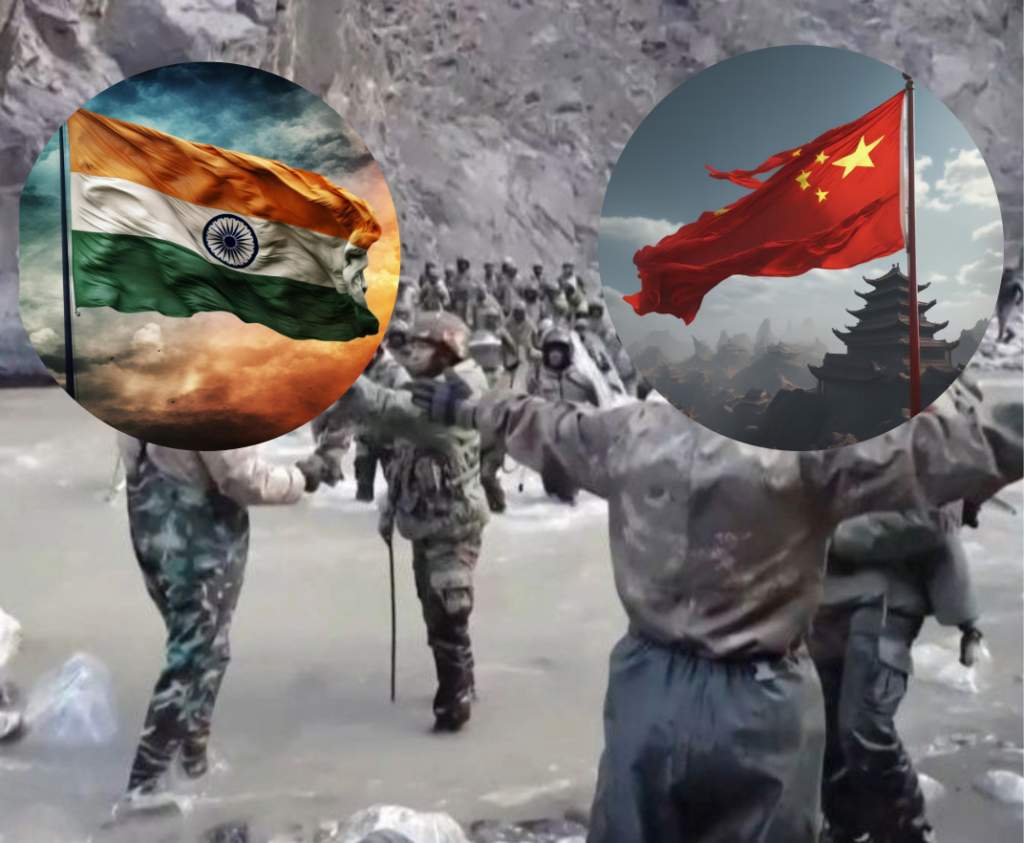
ITBP Chief’s Statement Raises Border Security Concerns
According to reports published on October 23, ITBP chief Shatrujeet Kapoor addressed personnel at an event in Alwar, Rajasthan, ahead of the force’s 65th Raising Day. He praised the performance of the force’s Shaurya Commando teams during recent confrontations in Arunachal Pradesh. Kapoor reportedly stated that face-offs had occurred at several places and were still continuing. His remarks attracted attention because they appeared to provide an official acknowledgment of developments that had previously been discussed largely through local reports and political statements.
The ITBP is responsible for guarding India’s frontier with China in coordination with other security agencies, including the Indian Army. Its personnel operate in challenging mountainous terrain, where extreme weather, difficult access routes and the sensitive nature of the Line of Actual Control (LAC) complicate border management. The reported confrontations have therefore raised questions about the current ground situation and the measures being taken to prevent escalation.
Why Arunachal Pradesh Is Strategically Important
Arunachal Pradesh occupies a crucial position in India’s northeastern region and shares a long, sensitive frontier with China-controlled Tibet. Beijing claims the Indian state as part of what it calls South Tibet, a position firmly rejected by New Delhi.
India maintains that Arunachal Pradesh is an integral and inalienable part of its territory. China has repeatedly objected to India’s administrative and official naming measures in the state, while India has rejected Chinese attempts to assert sovereignty through such actions. The Taksing sector has recently attracted particular attention following allegations by local groups that Chinese troops have restricted Indian access to certain traditional patrolling locations. These allegations have raised concerns among border residents, although the claims and their implications must be distinguished from independently established facts.
Congress Attacks the Modi Government
The ITBP chief’s remarks prompted a sharp reaction from the Congress, with senior party leaders questioning the government’s handling of the border situation and demanding answers from Prime Minister Narendra Modi. Congress general secretary Jairam Ramesh accused the Prime Minister and his administration of maintaining silence over the reported confrontations. He argued that developments along the border required greater transparency, particularly amid concerns about Indian forces’ access to certain patrolling points. Congress leaders also raised questions about the status of previous military arrangements, China’s infrastructure expansion near the frontier and the broader implications for India’s national security. Congress president Mallikarjun Kharge called on the Prime Minister to address the concerns and provide clarity to Parliament and the public.
The opposition’s central argument is that the government should explain the situation rather than allow uncertainty to persist. However, allegations of lost territory or compromised patrolling access need to be assessed against verified military information and official records.
What Has the Government Said?
The Ministry of External Affairs (MEA) responded to questions about the border situation on October 23. Spokesperson Randhir Jaiswal said that disturbances occur when Chinese forces deviate from established patrolling patterns along the Line of Actual Control. He also said that India and China continue to use existing diplomatic and military mechanisms to address outstanding issues and avoid misunderstandings or miscalculations. The MEA emphasised that maintaining peace and tranquillity in border areas is essential for the overall development of bilateral relations. The government has previously rejected allegations of systematic Chinese encroachment in Arunachal Pradesh. Government sources have maintained that the Indian Army and ITBP are equipped and deployed to monitor Chinese activities and protect the frontier.
Regarding the ruling Bharatiya Janata Party (BJP), media reports on October 23 indicated that there was no immediate official BJP response to the specific remarks by the ITBP chief. BJP functionaries have, however, previously accused the Congress of politicising national security issues and have defended the government’s commitment to protecting India’s borders. It would therefore be inaccurate to present a separate, specific BJP rebuttal to Kapoor’s latest statement as confirmed without further evidence.
Border Security and Diplomatic Challenges
The latest developments highlight the delicate balance India must maintain between protecting its territorial interests and managing diplomatic relations with China. Military face-offs along the LAC can create risks of escalation, particularly when patrols encounter each other in disputed areas. India’s response involves military preparedness, surveillance, infrastructure development and diplomatic engagement. The ITBP chief has also discussed strengthening training and equipment to prepare personnel for evolving battlefield conditions. For residents of remote border villages, the issue is particularly significant because access to traditional grazing grounds, hunting areas and local routes can affect livelihoods as well as perceptions of security.