
Bihar’s health department finds itself at the centre of a fresh political controversy, after opposition leaders alleged large-scale irregularities in the procurement of dustbins and other hospital supplies, pegging the alleged financial impact at around ₹300 crore — a figure some reports suggest could rise to nearly ₹700 crore once fully accounted for.
How the Controversy Surfaced
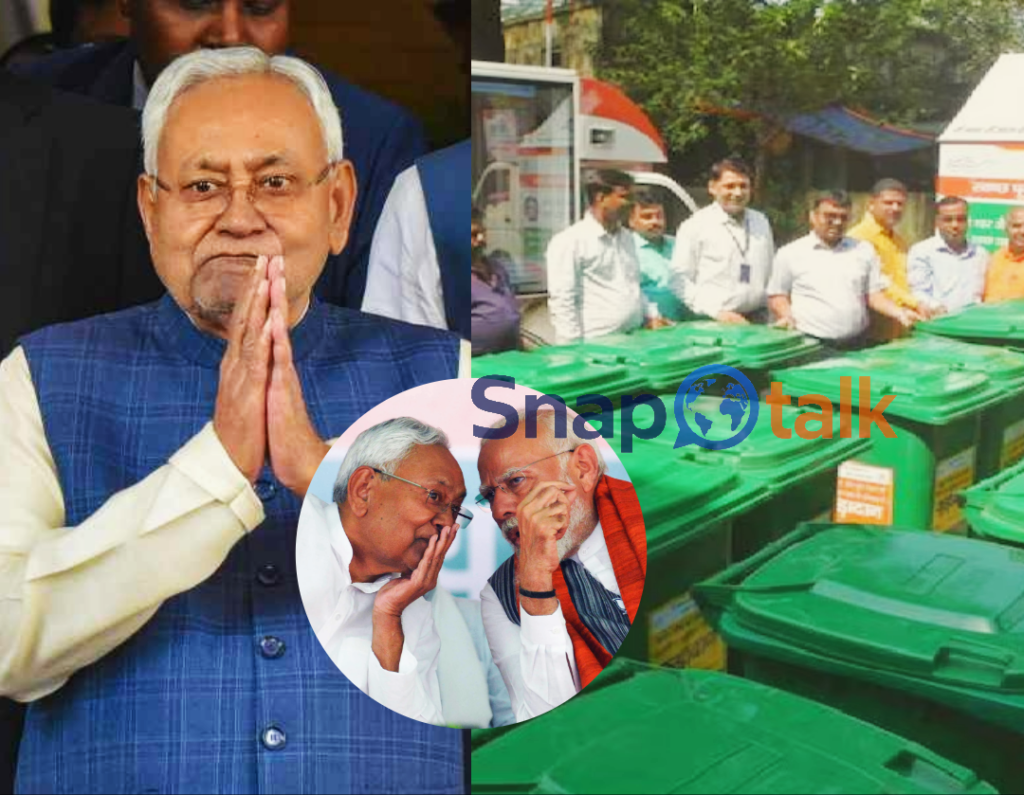
The row first came to light through an RTI query that exposed the pricing details of dustbins procured for government hospitals across Bihar. According to the allegations, 75-litre plastic dustbins — reportedly available in the open market for around ₹1,000 to ₹1,500 — were purchased by the state at a staggering ₹15,490 per piece. Separately, 45-litre dustbins, allegedly priced at around ₹700 in the market, were procured at ₹11,000 each. These figures, if accurate, would represent a markup of roughly ten times the standard market rate.
Who’s Making the Allegations
RJD leader Rohini Acharya has been the most vocal critic, raising the issue publicly on August 11, questioning the Bihar government over what she termed “VVIP” dustbins. In a social media post on August 15, her party escalated the claims further, alleging that a dustbin worth approximately ₹500 was purchased for ₹15,490 — a discrepancy the RJD argues points toward serious financial irregularities during the tenure of then-Health Minister Mangal Pandey. The party has directly questioned Chief Minister Samrat Chaudhary’s government over the procurement process and demanded accountability.
The Government’s Response
Officials at BMSICL (Bihar Medical Services & Infrastructure Corporation Limited), the state body responsible for medical procurement, have firmly rejected the allegations. Their central defence is that these were not ordinary household dustbins, but specialised containers designed specifically for medical-waste treatment and disposal — equipment that typically involves higher manufacturing standards, safety compliance, and handling requirements compared to regular waste bins. This distinction, officials argue, justifies the significant price difference compared to standard market dustbins.
A Pattern Beyond Bihar
This isn’t an isolated case in India’s history of procurement controversies. Similar “dustbin scam” allegations have surfaced in various states over the years — from a ₹1.16 crore inflated purchase scandal involving five Block Development Panchayat Officers in Sonepat, Haryana, to a ₹40 crore underground dustbin scheme in Dharamsala that was ultimately scrapped after the promised technology was never delivered. These recurring patterns have fuelled public skepticism whenever unusually high prices are reported for basic municipal or government equipment.
Where Things Stand Now
As of now, the Bihar dustbin procurement issue remains an active political allegation rather than a confirmed case of corruption. No formal investigation, audit report, or judicial finding has yet been made public to conclusively determine whether the pricing reflects legitimate specialised equipment costs or genuine financial irregularities. The opposition continues to press for a transparent probe, while the state government and BMSICL maintain that the procurement followed proper protocols for specialised medical-waste equipment.
Why It Matters
Beyond the specific allegations, this controversy highlights a broader and recurring concern in Indian governance — the need for greater transparency in public procurement processes, particularly in sensitive sectors like healthcare, where genuine specialised equipment costs can sometimes become difficult to distinguish from inflated or fraudulent billing. As Bihar’s political landscape continues to heat up, all eyes remain on whether an independent investigation will ultimately clarify what really lies behind the ₹15,490 price tag.